Category: Lessons From…

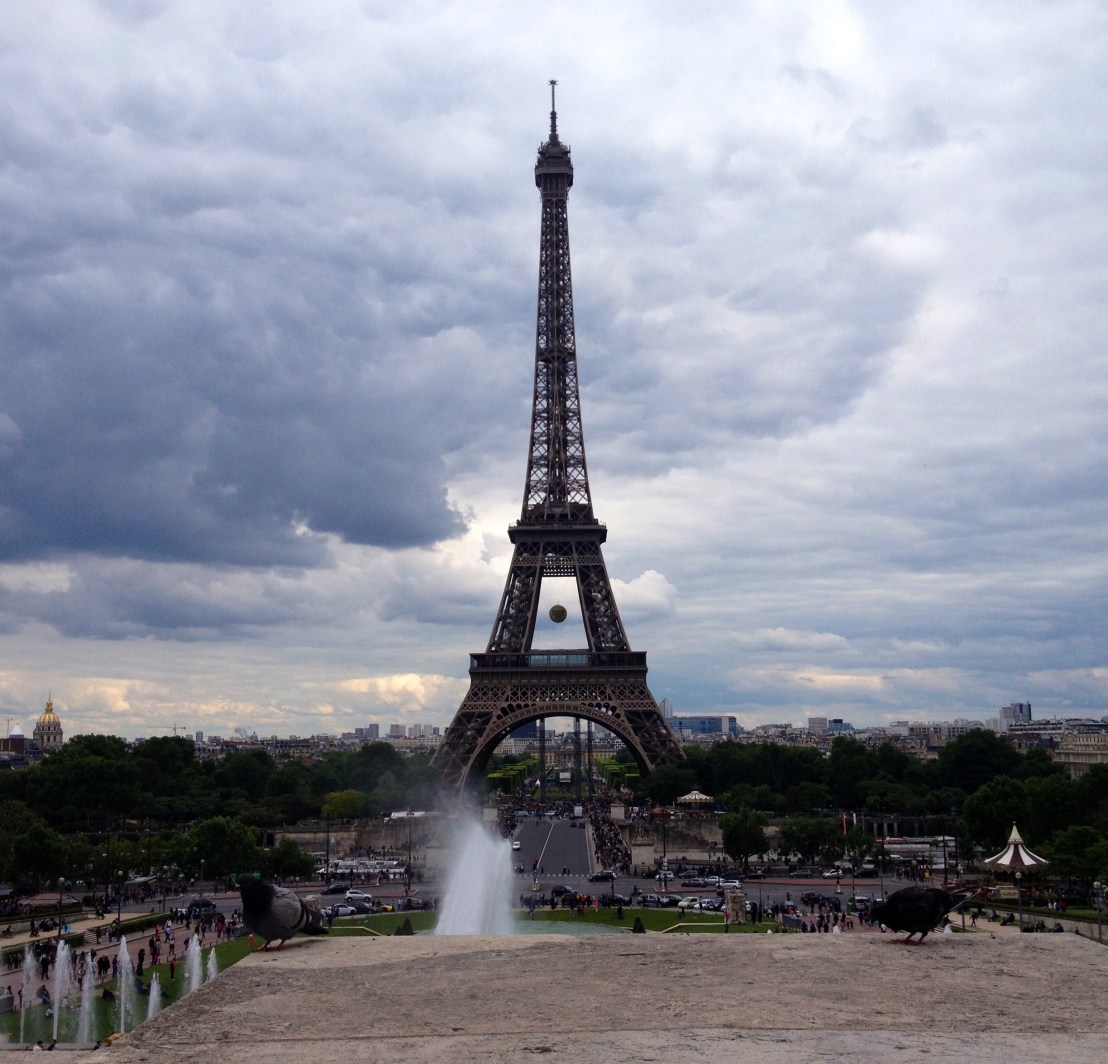
Liberté. Égalité. Fraternité. Vive la France.

IMG_0267

I’ve been thinking all weekend about what kind of post I wanted to write. At first I thought about writing about the anger that I felt when I heard the news, or the sadness and grief that I still feel, but in the end I realized that the most important emotion for me to hold on to was a feeling of hope for the future.


It’s easy to feel angry or sad or scared. Sometimes it isn’t as easy to feel love or peace in the face of such horribly violent acts. I spoke to my father on Friday and he said something to me that helped me to cut through those feelings of anguish: “Always remember that there will always be more good than bad in this world”. He reminded me that it’s important that in these times of darkness, we do not forget the foundations of our humanity. In a way, it’s good to feel grief and sadness over the loss of our fellow humans. It reminds us that we aren’t completely desensitized to the violence that can happen in the world. It reminds us that we care.


I think that far too often we get stuck on arguing our opinions about if and how we should retaliate whenever senseless acts of violence rock our world. I have decided to recuse myself from that discussion and leave it up to the people in charge, for now. So instead of opening the door to a political or moral debate, I have chosen to send out into the universe some peace that I believe this world is in desperate need of.


As many of you already know, I studied abroad in Paris when I was in college. It was the most enchanting experience of my life thus far. I absolutely fell in love with the vibrancy of Paris and its inhabitants. It was an absolute dream come to life. I know that there will always be a special place in my heart for the enchanting city of lights and all of the people who illuminate it. And so, to my French copains, I extend my deepest sympathies and condolences. As an American, I am proud to stand by you in your time of need just as you have stood by America throughout history in our times of need and revolution.


While Paris has been the closest hit to home in recent memory, do not forget the innocent people living in the countries that these terrorists call home. They have to either live with the terror or make an attempt to flee into a world that is quick to condemn them.


The take away that I would like to highlight is this simple message: We are all human. We all bleed and we all feel. We are all mothers, fathers, daughters, sons, sisters, brothers, neighbors, and friends. When it seems like there is so much hate to overcome in this world, remember the wisdom imparted to me by my father; the good in this world will always outweigh the bad.


– Hazel


Photo © 2015 Hazel Arroyo
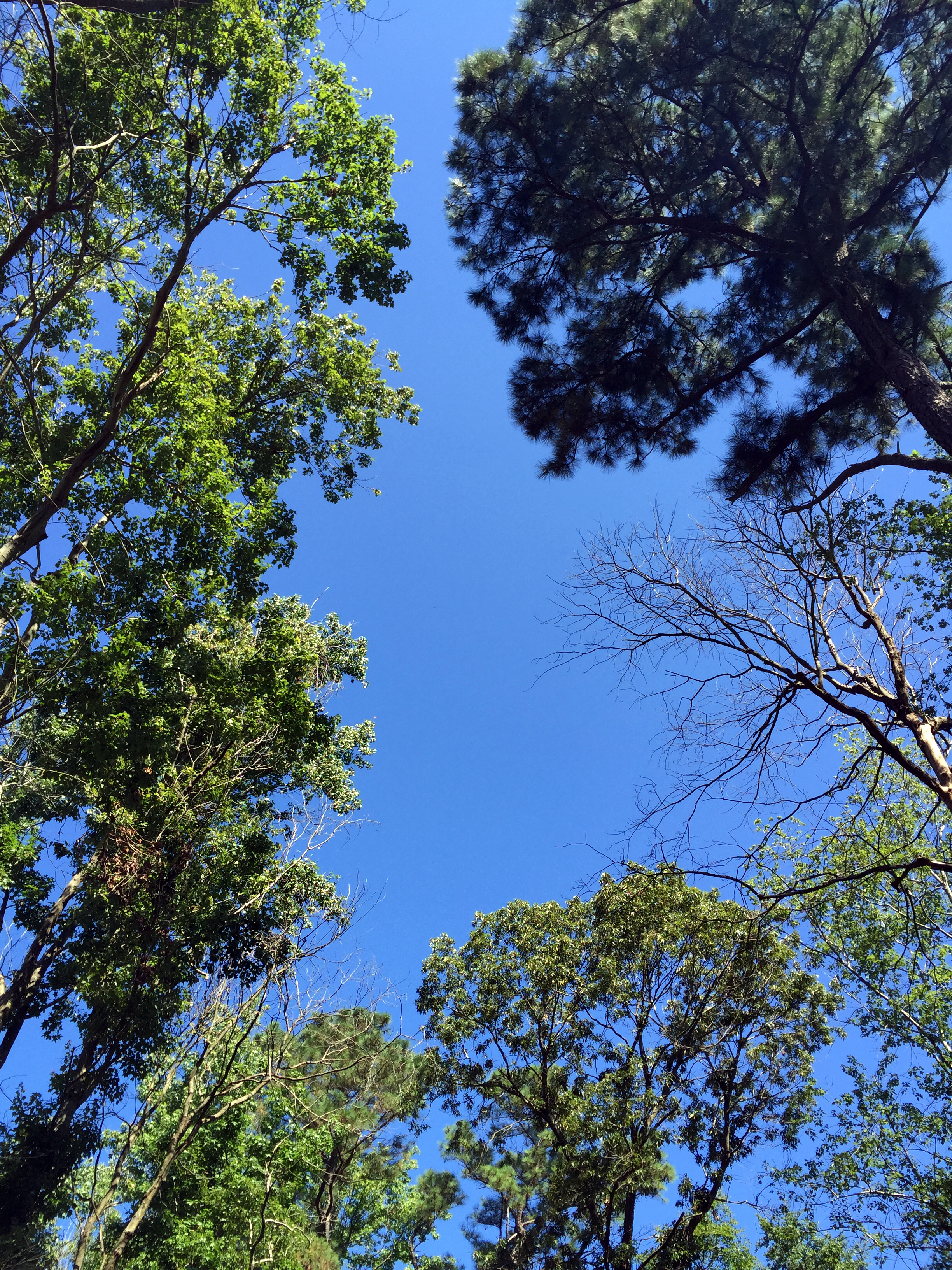
 

6 Ways to Free Yourself from Photographer’s Block

Nature4

At one point or another, we’ve all gotten into a creative rut. Sometimes it just feels like you’ve run out of things to photograph. Sometimes you just don’t feel like taking pictures anymore. I’m willing to bet that deep down, we know it’s not true but we just don’t know what to do next. We feel lost in the creative doldrums. Here are some of the ways that I try to avoid getting stuck with photographer’s block:

1. Start with what is closest to you.

Take pictures of things around your house, apartment, room, backyard, street, park across the street, etc. Take pictures of anything and everything. If you’ve already done this, make it more challenging for yourself; make it so that you obscure what the subject is.

2. Focus in on a specific element.

Follow some sort of theme whether it is looking for a specific type of texture, or a pattern, or a color. Try it in a variety of scenarios and locations and see how you can carry the element from photo to photo.

3. Experiment with your camera and/or photoshop. 

Have you never touched the ISO settings? Don’t know what changing your white balance will do? Start playing around with it. Learn about what it does and then find situations to test out the full spectrum of the function. Have you never used like 80% of the functions available in photoshop? Try them all out and play around with your favorites. Maybe you like using some of the artistic filters or playing around with hues; if you don’t try, you’ll never find out.

4. Try out new equipment.

Find a camera store or service that allows for camera equipment rentals. Try out a niche piece of equipment like a fish-eye lens, or filters, or a macro lens with a tripod and give it a go. I would recommend researching before going, not only to know how the equipment works before receiving it to save you time, but also make sure that if you are doing something like renting out a lens, you rent one that is compatible with your camera body.

5. Change the venue.

Check out all of the photos that you have taken in the last year. Now see where they all register geographically. Have you been photographing 10 square miles for a year? Maybe it’s time to try somewhere new. That’s not to say that you need to fly halfway around the world (although it would probably be amazing). Maybe it’s a matter of going to an area of town you’ve never photographed before. Or maybe there’s a mountain with great hiking trails an hour’s drive away. Change it up.

6. Try a different photography style. 

Do you consider yourself a nature photographer? Try your hand at street photography. Have you only taken pictures of people? Try taking some wildlife or still-life photographs. You never know what styles you might enjoy working with, and who knows, maybe the eye that you have developed doing one type of photography can make for an interesting take on a different genre of photography.

Happy Photographing!

– Hazel

Photo © 2015 Hazel Arroyo

Lessons From Experience

DSC_0078

In this day and age, smartphones have become increasingly common among the general population. With this kind of accessibility to photography all of the time, it wouldn’t be a difficult leap for this to inspire people to pursue DSLR (Digital Single-Lens Reflex) photography, either as a hobby or as a profession. Yet, DSLR photography seems to be declining. Many ponder, “why should I carry around this large and conspicuous piece of expensive equipment when I could just take pictures with my phone”?

Personally, I find myself on the fence when it comes to deciding if DSLRs are better or worse than smartphones. For me, it depends on the situation and it depends on the individual. Smartphones have recently come out with increasingly sophisticated cameras. Case in point, at Apple’s press conference last week, they announced that their new iPhone will have 4K video recording capabilities. Almost every smartphone has a camera whose megapixels rival that of most DSLRs on the market. Smartphones are much more user-friendly than a DSLR which, at a glance, may seem intimidating to the average person. The bottom line is that smartphones have made creativity more accessible to more individuals. Smartphones have become a creative outlet for the masses who are only interested in taking a creative shot but don’t want to have to learn about the settings of a camera. The same could be said for other photographing alternatives such as point-and-shoot cameras and interchangeable lens cameras (ILCs).

Situationally, bringing a DSLR is not always feasible to the average person and smartphones have been able to overcome this boundary. Sometimes when attempting to travel light, forgoing your DSLR for something lighter may be a better option. But, it boils down to asking yourself, will you be okay with forgoing a better image for the sake of traveling lighter? Bringing me back to my original point: it depends on the person.

IMGP0540a

So the question then remains: with all of the advancements and advantages of having a smartphone, point-and-shoot, or ILC, why then would anyone bother with a DSLR? To some, photography is not just a way for people to remember moments. To some, photography is a unique form of art that allows us to make something more of the physical world. Someone may look in a room and see just a room. A photographer may look in a room and see a whole world of possibilities. The camera is the photographers paint, brushes, and canvas all in one. Like any other artist, photographers need equipment that they are comfortable with, can manipulate easily, and can manipulate incrementally.

I would akin photography in many ways to video gaming. Both can be hobbies or professions. If someone is a casual video gamer, they probably have some game apps on their phones or might own a casual console such as the Nintendo Wii. A casual photographer if probably best suited by their high megapixel smartphone, a point-and-shoot, or an ILC. Now the more hardcore gamers might have several iterations of gaming consoles or may have even gone so far as to build their own computers specifically for gaming. Similarly, a hardcore photographer will most likely have a DSLR (or two) and be intimately familiar with each function that their camera is capable of. In the end, the opinion of the value of getting a DSLR varies depending on the level of commitment to the craft. For most, this probably rules out getting a DSLR because minute variations aren’t that important. For some, these seemingly minute variations are what make the difference between remembering a moment and capturing one.

What do you think? Have smartphones allowed for more creative people to express themselves? Have smartphones watered down photography with the selfie generation? Let us know what you think in the comments.

– Hazel

Photos © 2015 Hazel Arroyo

Lessons From Light and Lens by Robert Hirsch: How Photography Changed the World

LF1

When I was in college, one of my photography instructors chose a book (Light and Lens by Robert Hirsch) that seemed inconsequential at the time, but recently I picked it up again to give it a second glance. In the beginning (seriously, not even twenty pages in), Hirsch discusses the importance of photography. He enumerates how photography is often used to store important memories, enabling people to become sentimentally attached to images. While I agree with Hirsch (sentimentality and memory keeping is an important aspect of photography), I believe that there is much more to photography than that.

Photography can inspire you, it can allow the truth to be shown to you, and it can allow people to come to realizations they wouldn’t have been able to in other ways. Photographs can provide inspiration based on the context of the memory that it brings back or based on the context of the photograph itself. This can be seen every day in news media. People are moved by stories that are played on news outlets for a very simple reason: the visual representation of emotions. While it may be done in certain instances to garner higher ratings, the main reason to include visual images of war, disease, famine, etc. is to elicit an emotional response from the audience. Part of this emotional response is to inspire people to action. To find an example, we have to look no further than the recent anniversary of Hurricane Katrina. When Katrina devastated the Gulf Coast ten years ago, the images that were being broadcast all over the country inspired a nation to come to the aid of our fellow citizens in their darkest hours of need. Ten years later, these images still hold the powerful emotions that inspired a nation to action.

Photography can show us the truth. Not only can we look at news coverage and argue that the truth is being shown to people, but in a more literal sense, the authorities use photographic imaging in order to help them uncover the truth. Part of the protocol for investigators is to not only sketch out a crime scene and take eyewitness testimony if it’s available, but they also photograph crime scenes. Not only does this help them visually represent the scene of the crime to a potential jury, but it also helps them to be able to go back in time to the original crime scene and examine it more thoroughly in order to find details that could be of vital importance that would’ve otherwise gone unnoticed. If photographic truth is enough for criminal investigations, it is certainly enough for me.

Without photography: we wouldn’t be able to recall our childhoods with such clarity, we wouldn’t be able to inspire millions in a call to action, we wouldn’t be able to discover the whole truth of a situation, in short, we wouldn’t have a representation of anything that was simultaneously accurate and emotional. Think about how many photographic images you see everyday. Without the vital purpose that photography fulfills, the world would be a very different place. When you piece together each individual use of photography, it is quite clear that its purpose extends beyond that of bringing back fondness and nostalgia. Photographs are quite literally a world into another place, another time, or another state of mind. In short, photographs have changed this amazing world.

– Hazel

Photo © 2015 Hazel Arroyo